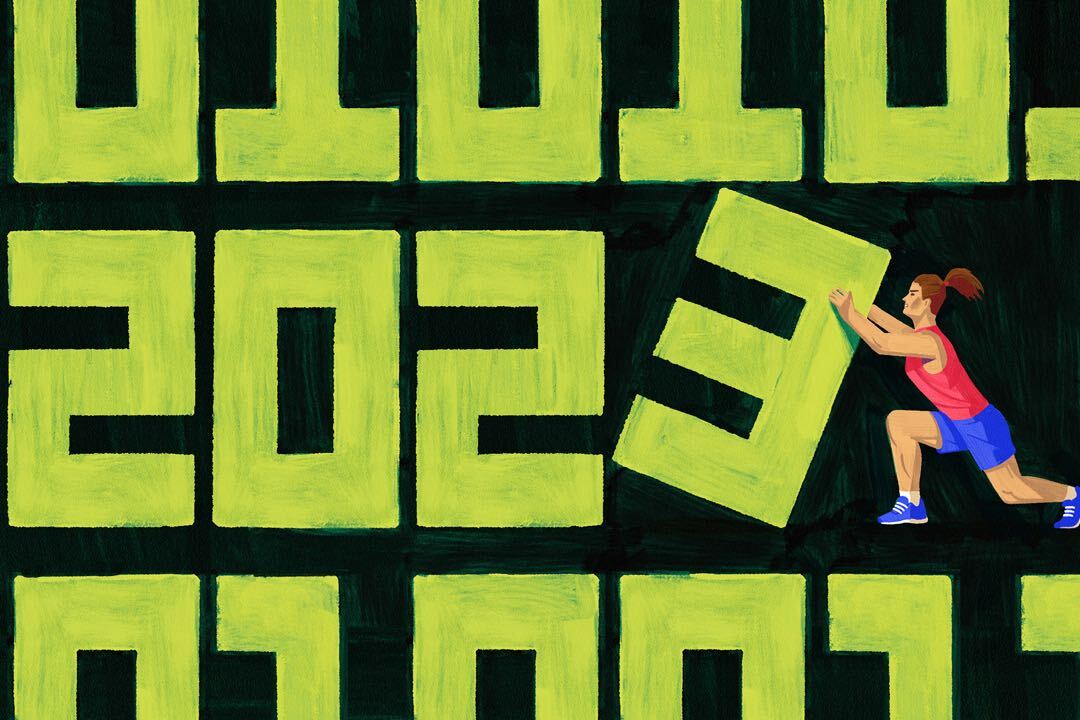
This is the very first installment of Great Match, a column about work out.
A ton of what we’ve been taught about conditioning is in fact diet society wrapped in spandex. Treadmills and ellipticals attribute calorie counts as prominently as they do length “traveled.” At barre, Sculpt Society’s “strengthen lengthen tone” courses, the slimness and litheness of your system is on screen, judgeable, as you do little movements that won’t go away you all that considerably more robust. Exercise routine streaks can finish up as a route to personal injury. Experts have identified for decades that working out is not a very good way to drop bodyweight, and however, the similar demand comes just about every January: time to make a prepare for diet program and exercise, to drop excess weight.
Even when you established aside the weight detail, as ever more lots of of us are making an attempt to do, a odd emphasis remains at the heart of how we are inclined to dissect physical exercise, specially in the media: There is this concept that you can management your entire body through exercise—make it do the job improved, make it previous lengthier. You can start off “bouncing your way to better overall health” by collaborating in a trampoline class. You ought to consider lessons from an astronaut’s exercise routines since, scientists explain, “long hours of sitting are not dissimilar, physiologically, to floating in room.” One recent paper suggests a relationship amongst training intensity and memory yet another concerning performing out and immunity one more induced nationwide media to issue no matter whether we’re all definitely pickle-balling challenging adequate for it to “count” as a workout.
We need to make improvements to them as a result of self-treatment, fruits and veggies, nutritional vitamins, and physical activity.
This see of training could possibly be very best recognized as “healthism,” a term coined decades ago by sociologist Robert Crawford. “The earlier handful of decades have witnessed an training and running explosion,” Crawford wrote in a 1980 paper titled “Healthism and the Medicalization of Daily Lifestyle,” pointing to the proliferation of health and fitness publications and “health themes” in newspapers. The idea is that we as people are held dependable for the wellbeing of our bodies, alternatively than wellness staying a products of our much larger environments, or say, the real clinical treatment we receive. We must enhance ourselves via self-treatment, fruits and veggies, nutritional vitamins, and actual physical activity. At times these items are legitimately useful, but occasionally, well, they aren’t. They put also much onus on people today, they can backfire, and also—the new glut of info and advice about what to do and when and for how extended is escalating to be really also considerably for any 1 individual to approach. And today, we have readily available to us frequent data on the most up-to-date reports as properly as customer engineering to support us “improve” our bodies. Armed with a somewhat inexpensive tracker, the ordinary jogger can grow to be a information scientist of her very own leisure pattern … and then is remaining to interpret the meaning (if there is a single?) of so many quantities. With arm patches that keep track of the contents of our blood, even non-diabetics can observe how our insulin levels reply to foods and work out in authentic time … while what the optimum fluctuations are for a healthful person is an open up issue. Exercising researchers, meanwhile, are operating to determine out the excellent “dose” of movement, as nevertheless motion is just an additional pill we can and should be using.
The glut of tips and tips and methods has meant that there is a complete large amount of stuff out there to keep keep track of of, and pretty much as much to debunk, on a scientific but also cultural level. If you have listened to Maintenance Phase, the well-known podcast by Michael Hobbes and Aubrey Gordon, you’re common with how rotten the guarantee of healthism has constantly been in simple fact, it was in Gordon’s new e book debunking myths about excess fat people that I most lately arrived throughout the time period. On their display, Gordon and Hobbes joyfully choose down every little thing from the President’s Bodily Fitness check, in which children are assigned a rating for their general performance in a series of problems that may perhaps or may perhaps not be pertinent to their actual properly-remaining, to workplace wellness plans, which are primarily practically nothing more than a scheme to demand some men and women extra for their health coverage. Several of our bigger conceptions of exercise, Hobbes and Gordon make very clear, are much more about making an attempt to wedge persons into a narrow and synthetic definition of properly-staying. But even if you attempt to ditch the dated messaging and check out to simply “follow the science” around motion and health, it speedily gets fraught: A analyze that came out as I was doing the job on this piece unsuccessful to affirm that work out actually has a positive effects on memory, regardless of the 1 revealed just a number of months in the past suggesting that it does.
There is in wellbeing media an ouroboros: the flawed items of information, the content debunking the bad or dated or restricted science. (I have participated in it, a lot!) Just take the notion that we really should wander 10,000 actions a day, for case in point. The concept, in accordance to Harvard Healthcare Faculty researcher I-Min Lee, originated in 1965 in Japan with a pedometer developed to count—you guessed it—10,000 measures. It is “an simple objective to don’t forget,” Lee informed Popular Science. But in the end the quantity is just a internet marketing gimmick. There are dozens if not infinite tales detailing the troubles with the 10,000 move rule, some arguing in favor of it, other parts outlining that, properly, 10,000 actions isn’t the solution, but—a 2022 JAMA paper implies!—maybe 7,000 actions is. We must continue to keep up with the churn of details about how exercising affects our bodies, and how we can preserve performing it greater, the news says. But so several of these tiny guidelines and methods are derived from genuinely useless or at worst flat-out mistaken science that we can also under no circumstances halt dutifully swatting away the bullshit, either.
It can be effortless to miss out on the fact that we actually realize the core essentials of training very very well, in the same way that we fully grasp the essentials of very good nourishment.
It can be simple to miss out on the truth that we basically recognize the core fundamental principles of workout really very well, in the exact way that we realize the principles of good nutrition. Just as we all know that we are without a doubt intended to try to eat veggies, everyone knows that you must go. The intriguing aspect is in the execution: How do we do this, pleasurably and sustainably? What are we attempting to obtain with it? I think where by it will get so complicated is when we try to make exercise the key to a million other goals—a greater mind, a superior body, a smaller sized system, a entire body that will dwell longer—the list goes on and on. I am fascinated in figuring out how we can make things less complicated for ourselves—and how to use science and technology as applications that essentially support, somewhat than muddle.
The again-and-forth between bunking and debunking tends to make it uncomplicated to forget about the finest element of physical exercise, which is that—yes, haha, regrettably—it makes you sense very good. And maybe even extra than that, it can be exciting. Even if jogging or weightlifting or swimming isn’t usually a overall joy in the instant, the internet improvement of performing exercises in your existence is not that you turn into a various condition, or a perfectly-oiled equipment. It really should be that you come to feel much better. Not as verified by metrics, heart rate, your shape, or even your major velocity, but simply just for you.
This calendar year in Slate, we’re going to try to go past both of those the training information cycle and the accompanying takedowns to converse about health in a different way, one particular that measures back again to examine and further more the position of movement in our lives, not just how it can bolster our wellness. We’ll check with reports, look at how enterprise styles warp our perception of what we “should” be executing, and extend ourselves, occasionally really actually. But most of all we’re going to request to reply the concern: Which areas of transferring in 2023 make our lives better? Not thinner, not more time, not even healthier—just very good.



More Stories
Strong link between cardio fitness and long-term health
How to educate your brain to take pleasure in training, in accordance to science
7 Fitness Hacks to Sneak in Exercise Painlessly Every Day